There are places in Zambia that most Zambians have never seen, and the Culture Minister went to look at three of them this week.
Christopher Chibuye, the Minister of Culture and Arts, visited Kasama on Tuesday 10 November and said Northern Province's heritage sites needed investment in infrastructure, better roads and stronger marketing if they were to draw the visitors and investors the government wants, Zambia Monitor reported. He paid a courtesy call on the Northern Province Minister, Wedden Chileshe, before touring the sites.
The three he named are the backbone of what the tourism trade calls the Northern Circuit: Kalambo Falls, Chishimba Falls and the Mwela Rock Art Sites, along with the province's traditional ceremonies and other heritage assets, according to the report carried by Lusaka Brief.
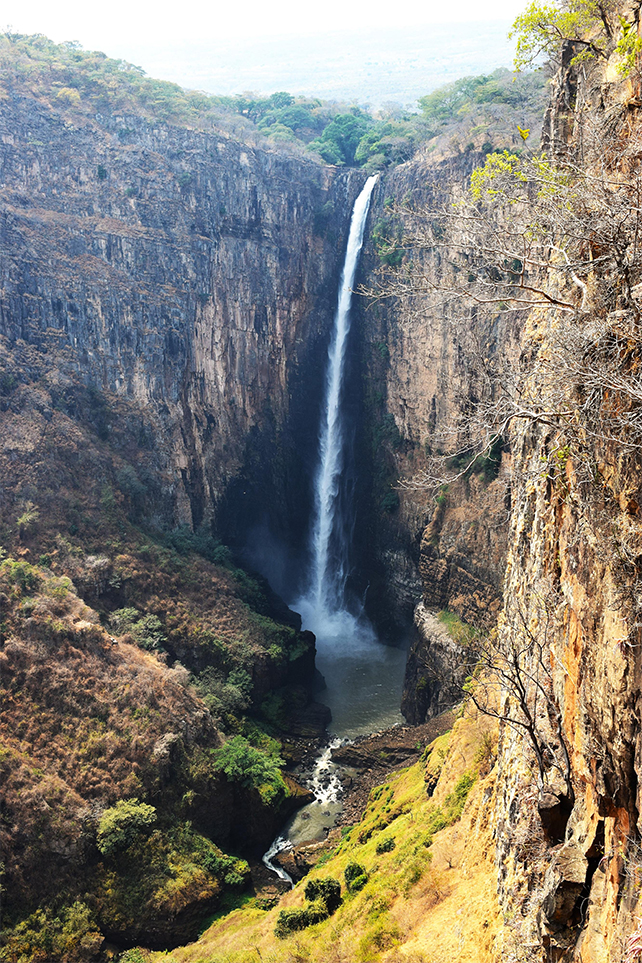
Each of them is worth the journey on its own. Kalambo Falls, on the border with Tanzania near Mbala, drops in a single great plunge into a deep, forested gorge — one of the most dramatic waterfalls on the continent, and a place where archaeologists reported in 2023 that a wooden structure had been found predating our own species, according to ScienceAlert. Chishimba Falls, on the Luombe River outside Kasama, is a gentler, greener cascade, the kind of place families picnic beside. And the Mwela Rock Art Sites, also near Kasama, carry paintings left on the rock by people who lived there long before any of today's towns existed — a record of Zambian history that predates writing.
Mr Chibuye said the Northern Circuit could help the country reach its target of five million tourist arrivals, but that doing so would need informed interventions and stronger collaboration between government and other stakeholders to promote the attractions, improve infrastructure and make the area attractive to investors, Zambia Monitor reported.
That last part is the honest part of the story. No figures were given for what the heritage investment would cost, which sites would be prioritised, or when any road works might begin; the report records a statement of need rather than a programme. A minister can name three wonders in a day. Turning them into a circuit that a family from Lusaka — or a visitor from abroad — can actually drive takes roads that hold up in the rains, signs that point the right way, guides who know the stories, and somewhere decent to sleep at the end of the day.
None of that is a reason not to go. It is a reason to go now, while the falls are still quiet and the rock art is still uncrowded — and to go with your eyes open. Take a reliable vehicle, carry fuel and water, ask locally about road conditions before you set out, and hire a local guide at the sites: they know the paths, and the money stays where it belongs.
Five million visitors is a big number. It will not be reached by speeches in Kasama. But the raw material is already there, falling, flowing and painted on the rock in the far north — waiting, as it has waited for centuries, for the road to catch up.