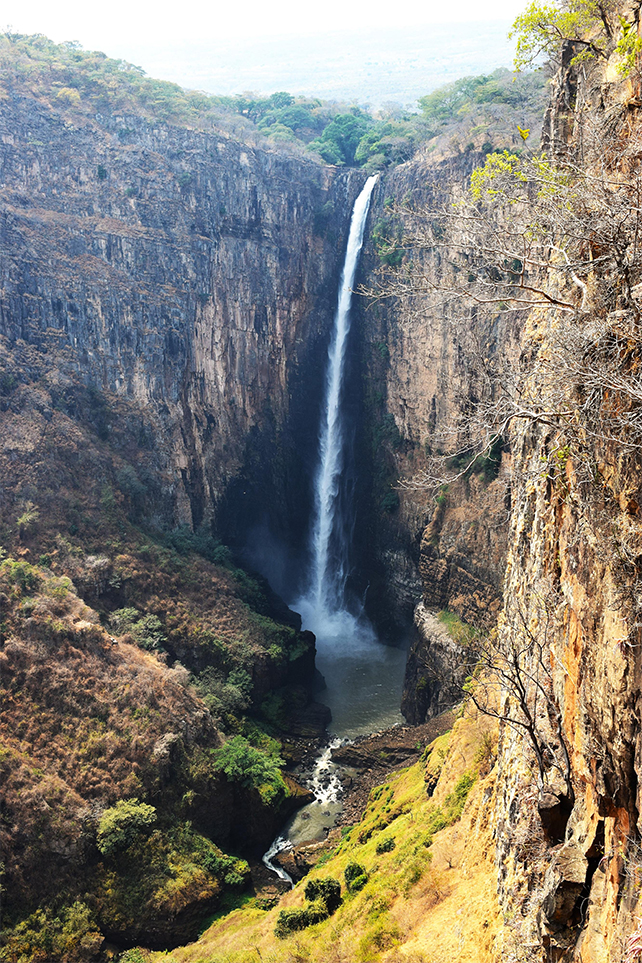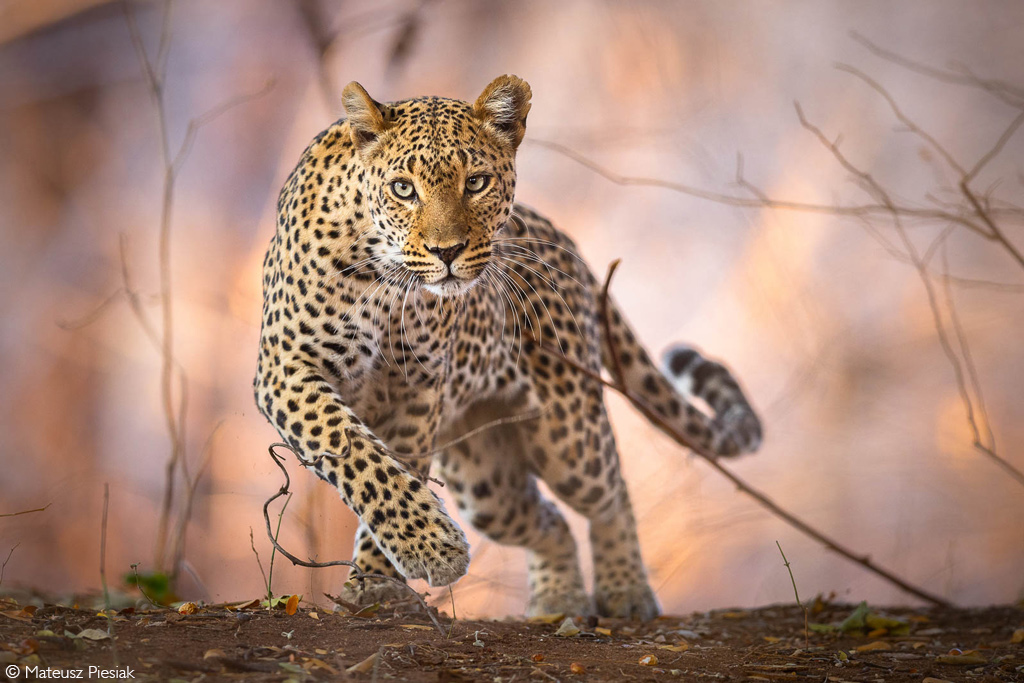
South Luangwa is the park that taught the world to walk. The walking safari was invented here in the 1950s, and seventy years on it is still the reason to come: a licensed guide, an armed scout from the Department of National Parks and Wildlife, a group of no more than six, and a morning spent on foot among leopards, lions, elephants and the Luangwa River's pods of hippos. The park covers 9,059 square kilometres and was established in 1972, according to the Department of National Parks and Wildlife. It is also, by reputation, one of the best places in Africa to see a leopard — and the place where the elephants of Mfuwe Lodge walk through reception on their way to a mango tree.
Getting there is the first decision. The fast way is Proflight Zambia from Lusaka to Mfuwe: one hour and ten minutes, with departures at 06:55, 10:35 and 16:35 depending on the season, according to the airline's published timetable. Flatdogs Camp, a lodge in the valley, lists the full one-way fare at US$307 from Lusaka to Mfuwe and US$305 back; Robin Pope Safaris lists US$330 each way. Proflight's own website shows return fares booked in the past week from US$280, so the price moves with demand and with how early you book. Most lodges then arrange a road transfer of roughly one and a half to two hours from Mfuwe Airport to your camp.
The slow way is the road: about 700 kilometres from Lusaka via the Great East Road through Chipata, taking nine to eleven hours, according to SafariBookings and to Brightpath Africa, which updated its Lusaka gateway guide on 10 November. The first four hours to Luangwa Bridge are fair but potholed in places, the stretch from the bridge to Chipata is smooth, and the last two hours from Chipata to Mfuwe are where the potholes are worst. The Jonda bus runs the Lusaka–Mfuwe route with a 04:00 departure, according to the same guide, but bus times change, so confirm the schedule before you travel.
Park fees are the one cost every visitor pays, and they are published by the Zambia Tourism Agency. For South Luangwa, the official schedule lists Zambian citizens at K55.60 per person per day, residents and SADC nationals at US$20, international visitors at US$25, and self-drivers at a flat US$30 a day regardless of nationality. A vehicle under three tons costs K34 if locally registered or US$15 if foreign registered, and camping in the park costs K42 a night for citizens and residents or US$5 for non-residents. Children under five go in free, and children aged five to thirteen pay half. One warning: another published schedule, Khokelo Safaris' 2026 park-fee page updated on 14 January 2026, lists the Zambian citizen fee at K41.70 rather than K55.60, and its vehicle and camping figures differ too. The two sources disagree, so treat the Tourism Agency's figures as the official schedule and confirm the kwacha amounts at the gate before you travel. A day, for fee purposes, runs from 6am to 6pm.
Where you sleep decides most of the budget, and the valley has a genuine range. All prices below are per person per night, sharing, and all the dollar figures are converted at K20.87 to the dollar, the rate shown by Finnhub on the morning of 16 November; the kwacha totals are our own arithmetic from the published rates, and lodge rates change with the season, so confirm before booking.
The budget end starts at Wildlife Camp, outside the park's main gate, which publishes its rates on its own website. Its safari tents on full board — accommodation, all activities, all meals, laundry and airport pickup — cost US$154 a night in the green season (1 November to 30 June) and US$278 in peak season (1 July to 31 October). A chalet on full board is US$205 green and US$325 peak. If you want to cook for yourself, a chalet is US$65 green and US$88 peak, a safari tent US$40 green and US$60 peak, and camping is US$15 a night all year. Flatdogs Camp, also by the gate, lists rooms from US$60 a night on a room-only basis.
The middle of the range is Mfuwe Lodge, the Bushcamp Company's lodge inside the park, famous for the elephants that walk through its reception. Safari.com, documenting the Bushcamp Company's 2026 rate sheet, lists it from US$565 per person sharing per night in the shoulder season from 1 November to 31 December 2026, all-inclusive of meals, drinks, game activities and shared transfers to and from Mfuwe Airport; park fees are extra. Nkwali Camp, Robin Pope Safaris' camp across the river from the park, is listed by the operator at US$435 a night in the emerald season, US$485 in the shoulder season and US$600 at peak, also excluding park costs.
The top of the range is Time + Tide Chinzombo, six open-fronted villas with private plunge pools on the Luangwa River opposite the park, listed from US$1,200 per person per night.
So what does three days actually cost, per person, with flights and park fees included? On a budget, three nights in a Wildlife Camp safari tent on full board in the green season is US$462, plus three days of park fees — US$75 for an international visitor, or K166.80 for a Zambian citizen at the Tourism Agency's rate — plus return flights of US$280 to US$612. That comes to roughly US$817 to US$1,149 for an international visitor, or about K17,000 to K24,000. In the middle, three nights at Mfuwe Lodge in the shoulder season is US$1,695, plus US$75 in park fees and the same flights: roughly US$2,050 to US$2,382, or about K42,800 to K49,700. At the top, three nights at Chinzombo is US$3,600, plus park fees and flights: roughly US$3,955 to US$4,287, or about K82,500 to K89,500. Green-season rates run 30 to 40 percent lower than peak, according to the lodge guides, and September and October fill months ahead, so the cheapest version of this trip is also the one you book earliest.
A few practical notes before you go. The dry season, May to October, is prime time: wildlife concentrates along the shrinking river and its lagoons, walking is at its best, and leopard sightings are at their most reliable. The green season, November to April, is cheaper, greener and best for birding and newborn animals. Lodges usually add park fees to your bill, so check whether a quote includes them. Bring cash in kwacha and US dollars for fees and tips. And wear neutral colours rather than dark blue or black — the valley has tsetse flies, and they are drawn to dark clothing.
South Luangwa rewards the traveller who goes on foot. That is the whole point of the place, and it has been since the 1950s.